Buried by Design: How Federal Classification Authority Becomes a Shield Against Human Rights Accountability
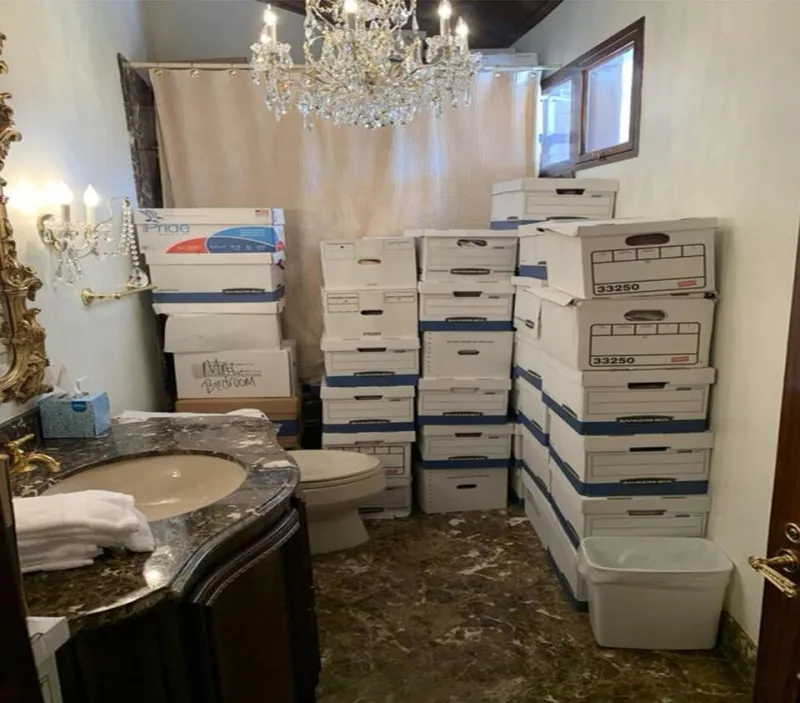
Photo: United States Department of Justice, Public domain, via Wikimedia Commons
When the Senate Intelligence Committee released its 2014 summary report on CIA detention and interrogation, the public received 525 pages of text—and learned that more than 6,700 pages of supporting findings remained classified. A decade later, the full report sits in a secured facility, its contents accessible to almost no one outside a narrow circle of cleared officials. The summary itself was released only after years of legal pressure and internal negotiation. For human rights advocates attempting to build accountability cases, that gap—between what exists and what can be accessed—is not an accident. It is policy.
The classification system, originally designed to protect genuinely sensitive national security information, has evolved into one of the most effective instruments for shielding federal misconduct from public scrutiny. Understanding how that transformation occurred, and how it operates across multiple agencies, is essential groundwork for any serious effort to document and challenge patterns of abuse.
The Statutory Foundation of Secrecy
Federal classification authority derives primarily from executive order rather than statute. Executive Order 13526, signed by President Obama and still operative in modified form, establishes three classification tiers—Confidential, Secret, and Top Secret—and grants broad discretion to agency heads and their designees to determine what qualifies. Critically, the order permits classification when disclosure could "reasonably be expected" to damage national security, a standard elastic enough to encompass virtually any operational detail an agency wishes to protect.
Beyond classification itself, agencies deploy a parallel architecture of withholding. The Freedom of Information Act's Exemption 1 shields classified materials outright, while Exemption 7 covers law enforcement records whose release could "reasonably be expected" to interfere with proceedings, reveal investigative techniques, or endanger individuals. These exemptions are not reviewed by independent courts in real time—they are asserted by the agencies themselves, with judicial review available only after lengthy litigation that most advocacy organizations cannot sustain.
The practical result is a system where the entity accused of misconduct also controls the evidence of that misconduct.
ICE, CBP, and the Operational Secrecy Doctrine
The national security classification framework, originally conceived for intelligence and military contexts, has migrated into immigration enforcement with significant consequences for human rights documentation. Immigration and Customs Enforcement and Customs and Border Protection routinely invoke law enforcement exemptions to withhold records related to detention conditions, use-of-force incidents, and medical care failures—areas where documented abuses have been extensive.
Requests for detainee death records, grievance logs, and medical incident reports frequently return heavily redacted documents or categorical denials. Internal inspection reports from the DHS Office of Inspector General—themselves often delayed by years—arrive with operational details removed. When advocates at organizations like the ACLU or Human Rights Watch attempt to reconstruct what happened to a specific individual in custody, they frequently encounter a documentary void: records that should exist by law are missing, records that do exist are withheld, and the agency's explanation for either condition is itself treated as sensitive.
The pattern is not random. Research by the Government Accountability Project and others has documented that withholding is disproportionately applied to records involving serious harm—precisely the materials most relevant to accountability.
Classification as Litigation Strategy
In legal proceedings involving allegations of torture or abuse, classification authority functions as a force multiplier for government defendants. The state secrets privilege—a judicially created doctrine with roots in a 1953 Supreme Court case that was itself later revealed to involve government deception—allows the executive branch to seek dismissal of civil lawsuits by asserting that allowing the case to proceed would require disclosure of classified information.
Since the post-9/11 expansion of surveillance and detention programs, the privilege has been invoked to terminate cases brought by rendition victims, torture survivors, and individuals subjected to warrantless surveillance. In case after case, courts have deferred to executive assertions rather than conducting independent review of the underlying materials. Plaintiffs with credible, documented claims of serious harm have been turned away not because their claims were adjudicated and found wanting, but because the evidence needed to adjudicate them was declared off-limits.
This dynamic does not merely delay accountability—it forecloses it entirely for many victims.
Reading the Fragments: Methodological Approaches for Advocates
Despite these barriers, a body of practice has developed among human rights researchers for extracting meaningful information from incomplete and partially redacted records. Several methodological approaches have proven particularly productive.
Pattern analysis across partial disclosures. When individual FOIA releases are aggregated across multiple requesters and multiple years, structural patterns often become visible even when specific incidents remain obscured. The date ranges of redactions, the categories of records withheld, and the specific exemptions invoked can collectively indicate the contours of what is being hidden.
Cross-referencing with inspector general and congressional records. IG reports and congressional hearing transcripts frequently reference classified materials in ways that provide partial windows into their content. A classified annex to an IG report may be inaccessible, but the unclassified summary's language often reveals the nature of its findings. Congressional testimony similarly contains inadvertent disclosures.
Declassified document repositories. The National Security Archive at George Washington University maintains one of the most comprehensive collections of declassified US government documents, including materials obtained through mandatory declassification review and presidential library releases. Cross-referencing newly released materials against this archive frequently surfaces corroborating evidence.
International tribunal records. Cases before the Inter-American Commission on Human Rights and European human rights bodies have compelled partial disclosures from the US government that domestic FOIA requests could not. These records are publicly accessible and often contain factual admissions that domestic agencies have refused to make.
Survivor testimony as primary evidence. Where documentary records are suppressed, structured testimony from survivors and witnesses—collected under methodologies developed by organizations such as the Physicians for Human Rights—constitutes legally and analytically significant evidence. Courts and international bodies have accepted such testimony in cases where government records were unavailable.
The Reform Gap
Proposals to reform the classification system have circulated in Washington for decades with limited effect. The Public Interest Declassification Board, established by Congress in 2000, has issued recommendations that successive administrations have largely ignored. Legislation to create independent judicial review of state secrets privilege assertions has stalled repeatedly.
What reform efforts have achieved is a clearer map of resistance. Agencies with the most extensive classification portfolios—the CIA, NSA, and components of DHS—have been the most active opponents of oversight mechanisms. That opposition is itself informative: it suggests that the classification apparatus is protecting not merely sensitive operational details but a record of conduct that would not survive public scrutiny.
For advocates, journalists, and researchers working in this space, the implication is strategic. The goal cannot be to wait for institutional reform that may not arrive. It must be to extract maximum accountability from existing tools—FOIA litigation, international mechanisms, survivor documentation, and the patient reconstruction of hidden patterns from the fragments that do emerge—while simultaneously building the political case for the structural changes that genuine accountability requires.
The silence is not impenetrable. But understanding its architecture is the first step toward dismantling it.