Erased Before Appeal: The Quiet Purging of Immigration Court Records That Leaves Asylum Seekers Without a Case
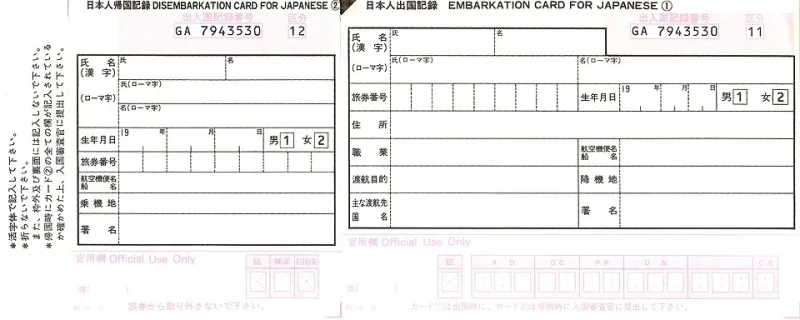
Photo: 日本国法務省入国管理局 (Immigration Bureau, Ministry of Justice of Japan); scanned by Yasu (talk), Public domain, via Wikimedia Commons
When a Guatemalan woman identified in legal filings only as M.V.L. received her asylum denial in 2021, her attorney immediately began assembling the documentary foundation for an appeal. Country condition reports, psychological evaluations, translated affidavits — the paper architecture of a persecution claim built over two years of preparation. What her attorney did not anticipate was that portions of the administrative record maintained by the Executive Office for Immigration Review (EOIR) had already been flagged for destruction under a retention schedule that treats certain immigration court documents as disposable once a case reaches a specific procedural threshold.
M.V.L.'s experience is not an anomaly. It is a pattern — one that immigration attorneys, legal aid organizations, and records transparency advocates have been quietly documenting for years, with insufficient institutional response and almost no public scrutiny.
A Records System Built for Administration, Not Accountability
The EOIR, the Justice Department agency that oversees the nation's 68 immigration courts, operates under a records management framework that was never designed with asylum appellate rights in mind. The agency's document retention schedules, governed broadly by the National Archives and Records Administration (NARA) guidelines, classify many immigration court files as routine administrative records subject to periodic purging — sometimes within as few as three to six years of case closure.
The problem is compounded by the definition of "closure." Under current EOIR practice, a case may be administratively closed — meaning it is removed from active dockets without a final decision — while underlying records begin aging toward destruction thresholds. If a case is later reopened, as frequently occurs when deportation orders are revisited or when changed country conditions warrant reconsideration, the supporting documentation from earlier proceedings may no longer exist.
Freedom of Information Act requests filed by multiple immigration legal aid organizations between 2019 and 2023 have revealed significant inconsistencies in what EOIR retains, for how long, and under what conditions records are transferred versus destroyed. In several documented instances, attorneys received FOIA responses confirming that records pertaining to active or recently active cases had been purged pursuant to scheduled destruction — a revelation that one immigration judge, speaking on background, described as "administratively tidy and legally catastrophic."
The Appellate Consequences of Missing Evidence
Under US asylum law, applicants bear the burden of demonstrating a well-founded fear of persecution on account of race, religion, nationality, political opinion, or membership in a particular social group. Appeals to the Board of Immigration Appeals (BIA) and subsequently to federal circuit courts are conducted largely on the administrative record — meaning the documentary evidence considered by the immigration judge constitutes the evidentiary universe within which appellate review occurs.
When portions of that record are missing, the consequences are not merely procedural. They are existential. An appellate court reviewing a denial cannot assess whether an immigration judge correctly weighed country condition evidence that no longer appears in the file. A BIA panel cannot determine whether a credibility finding was supported by the totality of testimony if transcript records have been partially destroyed. The legal standard for asylum review presupposes a complete record. The administrative reality frequently provides something far less.
"We are asking courts to review decisions made in the dark, using files that have been quietly hollowed out," said one attorney with a Midwest-based immigration legal services organization who has filed multiple complaints with EOIR's Office of the Chief Immigration Judge regarding missing records. "The asylum seeker has no remedy for that. There is no mechanism to reconstitute what has been destroyed."
Loopholes Dressed as Policy
The legal architecture enabling this practice rests on several interlocking ambiguities. First, the Immigration and Nationality Act does not explicitly mandate the indefinite preservation of immigration court records pending the exhaustion of appellate rights. Second, EOIR's internal operating policies permit destruction of records upon case closure without a uniform definition of what constitutes "closure" when cases may be administratively suspended or subject to future reopening motions.
Third — and perhaps most consequentially — there is no statutory provision requiring EOIR to notify applicants or their counsel before scheduled records destruction occurs. Unlike federal civil litigation, where rules governing spoliation of evidence carry significant legal consequences for parties who destroy relevant materials, immigration court proceedings operate under a separate administrative framework with substantially weaker preservation obligations.
This gap was partially exposed during litigation in the Ninth Circuit, where several consolidated appeals raised the question of whether the government's failure to maintain complete administrative records constituted a due process violation. The court's response was instructive in its limitations: while acknowledging the procedural irregularity, the panel declined to establish a broad preservation mandate, instead remanding individual cases for record reconstruction where feasible — a remedy that legal scholars have noted is both narrow and practically difficult to implement.
What FOIA Requests Reveal — and Conceal
Human Rights Data's review of publicly available FOIA litigation records and published EOIR response logs identifies a recurring phenomenon: requests for case files in asylum matters that resulted in denial decisions frequently return with notations indicating that records were destroyed pursuant to General Records Schedule provisions, with destruction dates that in several instances predate the filing of the FOIA request itself.
This creates a secondary transparency problem. When advocates attempt to audit whether asylum denials were based on complete information — a core function of evidence-based human rights monitoring — they encounter a wall of administrative absence. The records needed to verify the integrity of the decision-making process have been eliminated by the very institution whose decision-making is under scrutiny.
The EOIR has not publicly responded to specific inquiries about its records retention practices as they relate to appellate rights. A spokesperson's written statement, provided to a legal news outlet in 2022, described the agency's records management as consistent with applicable federal guidelines — a characterization that records transparency attorneys have challenged as technically accurate but substantively misleading.
Toward a Preservation Standard
The remedy advocates are seeking is not administratively complex. A coalition of immigration legal organizations has proposed a straightforward statutory fix: mandatory preservation of all immigration court records until the later of five years following final administrative closure or the exhaustion of all federal appellate review, whichever occurs last. A parallel proposal would require EOIR to notify applicants and counsel of any scheduled destruction and provide a 90-day window during which records may be transferred to the applicant's legal representative.
Neither proposal has advanced through Congress. Neither has been adopted as agency policy.
In the interim, asylum seekers whose cases hinge on evidentiary records that may or may not still exist occupy a uniquely precarious legal position — one in which the state simultaneously determines their fate and controls the documentary evidence relevant to that determination, with the authority to eliminate that evidence on a schedule of its own design.
For M.V.L., whose case remains in appellate limbo, the missing records are not an abstraction. They are the difference between a reviewable decision and an unreviewable one — between a system that can be held accountable and one that has quietly arranged its own impunity.
Human Rights Data monitors systemic transparency failures across US legal and administrative institutions. If you are an immigration attorney or advocate with documented evidence of EOIR records destruction affecting active or appellate cases, contact our research team through our secure submission portal.