Sealed Fates: The Legal Architecture Concealing Systemic Abuse in America's Child Welfare System
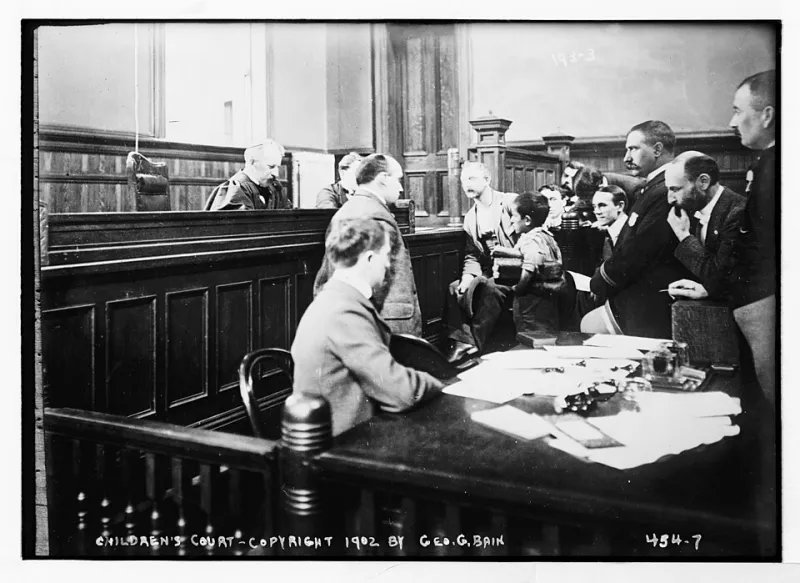
Photo: Bain News Service, publisher, Public domain, via Wikimedia Commons
When a child enters the foster care or adoption system in the United States, a parallel paper universe is created around them — one that, in most states, is almost entirely shielded from public scrutiny. Court orders, placement records, abuse investigations, and institutional assessments are routinely sealed under statutes that were designed, ostensibly, to protect children's privacy. But a growing body of advocacy and legal scholarship suggests that these same protections have become instruments of institutional self-preservation, shielding state agencies, private contractors, and licensed facilities from the kind of systematic accountability that could prevent future harm.
The result is a data void at the heart of American child welfare — one with profound implications for human rights documentation.
The Scope of the Problem
The United States currently has approximately 390,000 children in foster care on any given day, according to the most recent federal data from the Children's Bureau. Each of those children generates a substantial documentary record: placement histories, medical evaluations, abuse reports, court filings, and caseworker notes. Yet in the vast majority of states, the overwhelming share of that documentation is sealed by default, accessible only to parties directly involved in individual cases.
This structure makes it nearly impossible for external researchers to conduct the kind of longitudinal, cross-case analysis that would reveal systemic patterns. Were a private residential facility systematically abusing children across multiple placements? Did a particular county agency repeatedly return children to dangerous homes? Did a licensed adoption agency engage in coercive practices targeting low-income families of color? Without access to aggregated records, these questions frequently go unanswered — not because evidence does not exist, but because the evidence is legally inaccessible.
Federal law adds another layer of complexity. The Child Abuse Prevention and Treatment Act (CAPTA) requires states to maintain the confidentiality of child abuse and neglect reports as a condition of receiving federal funding, but it leaves significant discretion to individual states regarding the scope and duration of those protections. The resulting patchwork is bewildering: some states permit limited disclosure in cases involving child fatalities; others maintain near-total sealing regardless of outcomes.
Racial Disparity and the Accountability Gap
The opacity of child welfare records is not a racially neutral phenomenon. Black children are represented in the foster care system at nearly twice their share of the general child population. Indigenous children face even starker disparities — in some states, Native children account for a wildly disproportionate share of foster placements despite comprising a small fraction of the overall child population, a legacy directly traceable to the Indian Child Welfare Act's uneven enforcement and the long shadow of federal assimilation policies.
For advocates working on behalf of these communities, sealed records represent more than an inconvenience. They represent a structural barrier to justice. Without the ability to document patterns — to show, for instance, that a particular agency removed Indigenous children from family placements at dramatically higher rates than white children, or that a residential facility housing predominantly Black youth had a history of unaddressed abuse complaints — it becomes extraordinarily difficult to mount the kind of evidence-based legal and policy challenges that drive systemic reform.
Tribal nations face a compounded version of this problem. The Indian Child Welfare Act grants tribes certain rights regarding the placement of Native children, but enforcement depends heavily on notification — notification that frequently fails to occur, in part because the paper trail that would document those failures is sealed. Advocacy organizations such as the National Indian Child Welfare Association have long argued that this opacity is not incidental but structural, enabling ongoing violations of federal law while insulating state agencies from accountability.
What Researchers Are Blocked From Seeing
The practical consequences of record sealing for human rights documentation are substantial. Consider the categories of analysis that are currently foreclosed or severely constrained:
Pattern analysis across placements. Without access to aggregated placement histories, it is impossible to determine whether particular facilities or agencies accumulate disproportionate shares of abuse complaints — a basic indicator of institutional failure that any competent oversight regime would monitor.
Outcomes tracking for adoptees of color. Research on adoption disruption — cases in which adoptive placements fail after finalization — is severely hampered by record sealing. The limited data that does exist suggests significant racial disparities in disruption rates, but the evidentiary base is far too thin to support robust policy conclusions.
Contractor accountability. A significant and growing share of child welfare services in the United States is delivered by private contractors rather than government agencies. These entities are often subject to even less public transparency than state agencies, and their records are frequently protected by both child welfare confidentiality statutes and commercial privacy claims.
Cross-state comparisons. Children who move across state lines — a common occurrence in the foster system — generate records in multiple jurisdictions, each with its own sealing regime. Tracking what happens to these children over time is, for practical purposes, impossible for external researchers.
Reform Pathways: What Accountability Could Look Like
The argument for greater transparency in child welfare records is not an argument against child privacy. It is an argument for distinguishing between protections that serve children and protections that serve institutions. Several reform frameworks merit serious consideration.
Mandatory aggregate reporting. Federal law could be amended to require states to publish standardized, de-identified aggregate data on placement outcomes, abuse substantiations by facility, and demographic breakdowns — as a condition of receiving federal child welfare funding. This would enable pattern analysis without exposing individual children's identities.
Independent oversight bodies with record access. A number of states have established child advocate offices with limited authority to review sealed records in individual cases. Expanding the mandate of such bodies to include systemic pattern review — with appropriate privacy safeguards — would create an institutional mechanism for the kind of analysis currently blocked by confidentiality statutes.
Tribal data sovereignty. For Indigenous children, record access reform must be coupled with genuine tribal data sovereignty — the right of tribal nations to access, control, and analyze data concerning their own members. This is not merely a technical fix but a matter of self-determination with deep roots in federal Indian law.
Adult adoptee access. A growing number of states have passed legislation granting adult adoptees access to their own original birth certificates and adoption records. Extending and standardizing this access — and coupling it with research exemptions for properly credentialed investigators — would begin to open the evidentiary record without compromising the privacy of minors.
The Stakes of Continued Silence
Child welfare systems exist, in theory, to protect the most vulnerable members of American society. When those systems fail — and the evidence that they fail disproportionately for children of color and Indigenous youth is substantial — accountability depends on documentation. Documentation depends on access. And access, in most of the United States, is currently structured to prevent precisely the kind of systematic scrutiny that accountability requires.
This is not a technical problem. It is a political one, sustained by institutional interests that benefit from opacity and by a legal framework that has never been seriously interrogated from a human rights perspective. Changing it will require sustained advocacy, legislative pressure, and the kind of evidence-based argumentation that this site exists to support. The data to prove systemic failure exists. The task now is to make it accessible.