Stolen Wages, Missing Numbers: The Federal Failure to Count America's Most Common Labor Crime
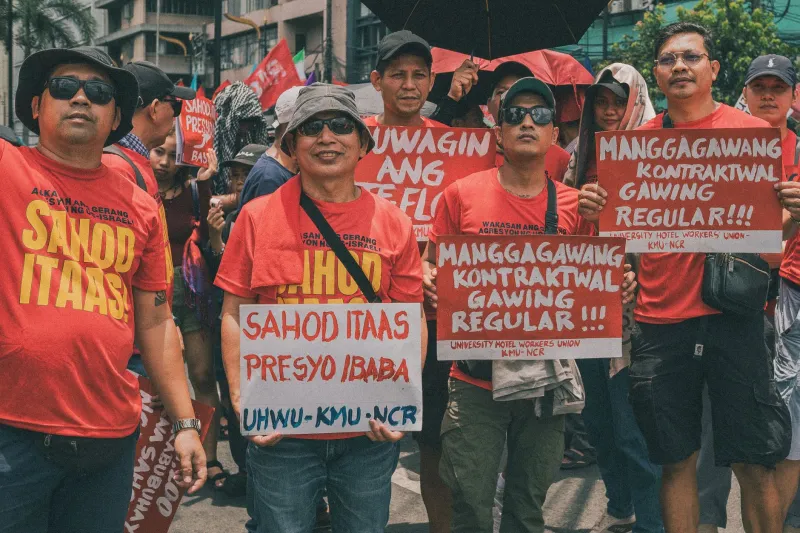
Every year, American workers lose more money to wage theft than to all robberies, burglaries, and motor vehicle thefts combined. That figure—drawn from the Economic Policy Institute's long-standing research—is striking not only for its magnitude but for its source: it had to be reconstructed by independent researchers because the federal government has never produced a unified, standardized measure of its own.
This is not an accident. It is a structural failure with consequences that fall hardest on the most economically vulnerable workers in the country.
What Wage Theft Actually Encompasses
The term "wage theft" covers a wide and legally recognized spectrum of employer violations: paying workers less than the applicable minimum wage, refusing to compensate overtime hours, requiring employees to work off the clock, misclassifying full-time employees as independent contractors to deny them benefits, and illegally withholding earned tips. Each of these practices is prohibited under existing law. Yet the enforcement architecture designed to detect and punish them is so atomized that no one—not Congress, not the Department of Labor, not state labor commissioners—can say with any confidence how often they occur, in which industries they cluster, or which demographic groups bear the greatest burden.
The result is a human rights blind spot embedded within the institutional structure of the American state.
A Landscape of Competing, Incompatible Systems
Federal wage enforcement authority is divided primarily between the Department of Labor's Wage and Hour Division (WHD) and the Equal Employment Opportunity Commission, but those two agencies do not share a common data architecture. Beyond the federal level, each of the fifty states maintains its own labor enforcement office, operating under its own definitions, filing procedures, case classification systems, and disclosure standards. Many municipalities with their own wage ordinances—cities like Seattle, Chicago, and New York that have enacted local minimum wage and paid leave laws—collect enforcement data that is not transmitted to any higher-level authority.
The practical effect is that a garment worker in Los Angeles who files a wage claim with the California Labor Commissioner, a poultry processor in Arkansas who complains to the WHD regional office, and a restaurant server in Houston whose tip income is being skimmed by management are each generating data points that will never be aggregated, compared, or analyzed together. Their individual experiences of exploitation remain permanently siloed.
Researchers attempting to construct national estimates are forced to triangulate from surveys, litigation records, administrative databases, and Freedom of Information Act requests—a patchwork methodology that produces wide confidence intervals and limited demographic granularity.
Who Pays the Price for Bad Data
The populations most exposed to wage theft are precisely those least equipped to navigate fragmented enforcement systems. Undocumented immigrant workers, who face the threat of deportation as implicit leverage against filing complaints, are systematically underrepresented in agency data. Workers in domestic service, agriculture, and informal day labor occupy sectors that have historically been excluded from federal labor protections or subjected to weaker enforcement. Tipped workers in the service industry face a structurally distinct set of violations that existing reporting categories often fail to capture accurately.
When enforcement data is incomplete, enforcement resources are misallocated. Agencies cannot target industries with the highest violation rates if those rates are unknown. They cannot demonstrate the effectiveness of their interventions without baseline measurements. And they cannot make the case to Congress for increased investigative capacity without credible, comprehensive evidence of the problem's scale.
The data vacuum, in other words, is not a neutral absence. It actively perpetuates the conditions that allow wage theft to persist.
How Employers Exploit the Measurement Gap
The fragmentation of labor data creates a specific form of impunity for employers who operate across jurisdictions. A national restaurant chain found violating minimum wage laws in one state faces no mechanism by which that violation is flagged to regulators in another state where it operates. A staffing agency that systematically misclassifies workers in multiple cities can resolve complaints in each locality separately, avoiding the pattern recognition that would trigger a more serious federal investigation.
Legal scholars who study wage theft enforcement have described this as a "serial violator" problem: the same employers repeatedly appear in enforcement records, but because those records are never consolidated, the pattern is invisible to any single regulating authority. The employer who has settled wage claims in five states looks, to each individual agency, like a first-time offender.
What Unified Data Would Reveal
The case for a national wage theft tracking system is not merely administrative. It is a civil rights argument. A standardized database—one that captured violation type, industry sector, employer size, worker demographics, claim outcome, and penalty assessed—would generate, for the first time, a rigorous empirical portrait of labor exploitation in America.
Such a system would make visible the intersection of wage theft with race, immigration status, and gender. It would allow researchers and advocates to identify which industries are most resistant to compliance, which enforcement strategies produce durable deterrence, and which worker populations require targeted outreach and protection. It would give Congress the evidence it needs to reform the statute of limitations on wage claims, increase civil penalties, and fund meaningful investigative capacity at the WHD.
Several advocacy organizations, including the National Employment Law Project and Interfaith Worker Justice, have called for precisely this kind of infrastructure. Proposals have been introduced in Congress at various points to require standardized reporting from state agencies as a condition of receiving federal labor enforcement grants. None has advanced to enactment.
The Political Economy of Ignorance
It would be naive to treat the absence of unified wage theft data as a purely bureaucratic problem awaiting a technical solution. The industries most implicated in wage theft—agriculture, food service, construction, domestic care, and retail—are among the most politically active opponents of expanded labor regulation. Their lobbying investment in maintaining weak enforcement infrastructure is substantial and well-documented.
In that context, the missing metric is not simply a gap in government recordkeeping. It is a policy outcome that serves identifiable interests. When data does not exist, accountability cannot follow. When accountability cannot follow, the practice continues.
For workers whose wages are stolen, the consequences are immediate and material: rent unpaid, groceries unaffordable, medical appointments canceled. For the employers who profit from that theft, the absence of a national accounting system is a structural subsidy—one paid for in the diminished economic security of the people least able to absorb the loss.
Toward a Right to Be Counted
Human rights frameworks have long recognized that the failure to measure a violation is itself a form of institutional complicity. The United States government's inability—or unwillingness—to produce a standardized national count of wage theft is not a minor administrative oversight. It is a choice that has been made, repeatedly, in the face of evidence that the problem is vast, that its victims are among the most marginalized workers in the country, and that better data would compel better policy.
Building that data infrastructure would not, by itself, end wage theft. But it would make continued ignorance impossible to sustain—and continued inaction impossible to excuse.